News
2026 ZGC Forum Regular Activity – Forum on Science, Technology and Innovation for the Sustainable Development of Natural History Museums Held in Beijing
published:2026-10-08
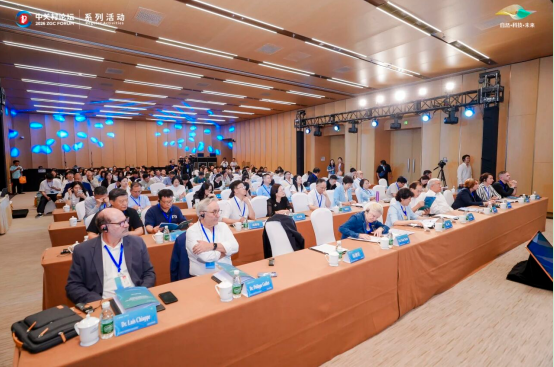
To thoroughly implement the national strategic deployment of advancing in-depth integration of artificial intelligence with the real economy and public cultural services, and further explore innovative initiatives for natural history museums in the AI era, the 2026 ZGC Forum Regular Activity – Forum on Science, Technology and Innovation for the Sustainable Development of Natural History Museums grandly opened at ZGC International Innovation Center in Beijing on the afternoon of June 5, 2026. Co-hosted by the Beijing Academy of Science and Technology and the Chinese Association of Natural Science Museums, and undertaken by the Natural History Museum of China, the forum centered on the theme "AI & Smart Museums". It focused on the application and trends of AI technologies in venue construction, service upgrading and informatization of natural history museums, gathering global insights to jointly explore new paths for museums of the future.
Distinguished experts and leaders in attendance included Dr. Fang Xiaomin, Member of the Chinese Academy of Sciences; Prof. Nicola Clayton, Professor at the University of Cambridge and Fellow of the Royal Society; Dr. Luis Chiappe, Member of the Real Academia de Ciencias de España and Senior Vice President of the Natural History Museum of Los Angeles County; Dr. Anna Klyukina, Director of the State Darwin Museum; Mr. Ni Minjing, Director of Shanghai Science and Technology Museum; Dr. Philippe Guillet, Director of Nantes Natural History Museum; Mr. Richard Dilly, Director Experience & Engagement of the Australian Museum, as well as more than 160 representatives from natural history museums, scientific research institutions and tech enterprises at home and abroad. Held in a hybrid online-offline format, the forum built a high-level academic exchange platform for museum professionals and the public.
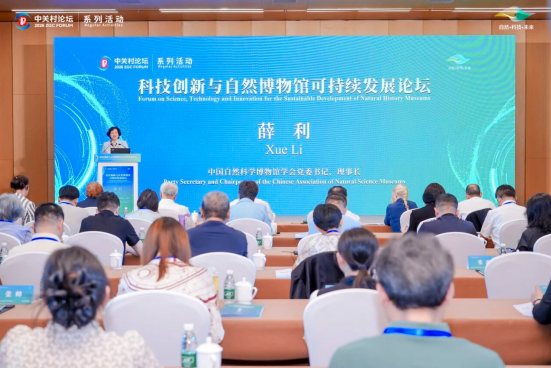
Dr. Xue Li, Party Secretary and Chairperson of the Chinese Association of Natural Science Museums, stated in her address that the in-depth integration of AI and natural history museums is far more than simple technical superposition; it represents a systematic reshaping of development philosophies, business models and service systems.
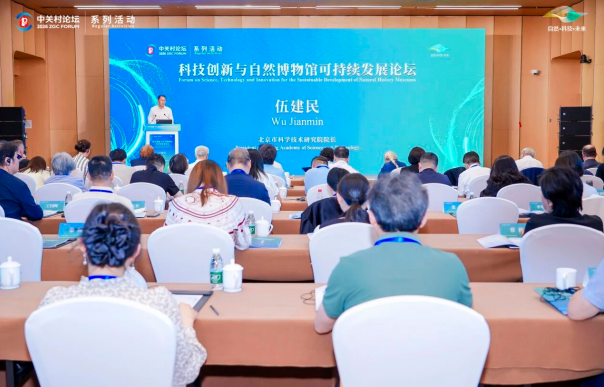
Dr. Wu Jianmin, President of Beijing Academy of Science and Technology, emphasized that AI and smart museums, when applied in the field of museums, embody tensions between technology and tradition, data and intuition, efficiency and contemplation, algorithms and humanity. Such tensions generate profound reflection and foster innovation. As a vital bridge linking science and society, natural history museums shall embrace new technologies to fulfill science popularization obligations, undertake the historical duty of safeguarding cultural and natural heritage, and promote the spirit of science.
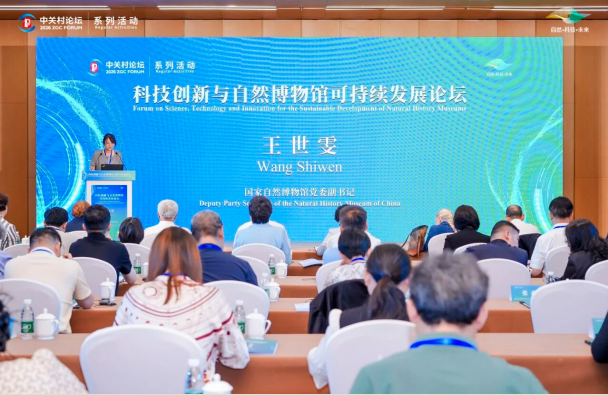
The opening address session was hosted by Ms. Wang Shiwen, Deputy Party Secretary of the Natural History Museum of China.
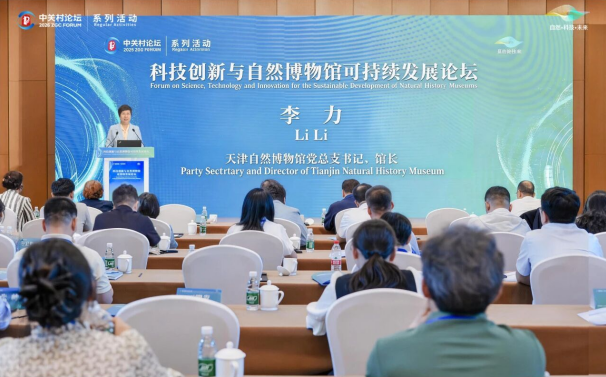
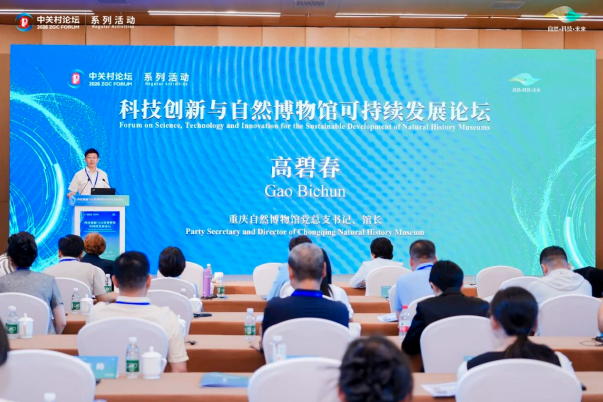
The keynote speech session was co-hosted by Ms. Li Li, Party Secretary and Director of Tianjin Natural History Museum, and Mr. Gao Bichun, Party Secretary and Director of Chongqing Natural History Museum.
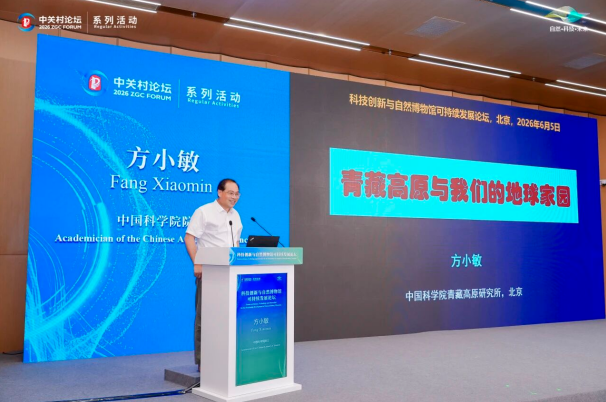
Dr. Fang Xiaomin, Member of the Chinese Academy of Sciences, systematically elaborated on the profound correlation between the ecological evolution of the Qinghai-Xizang Plateau and global climate change, and highlighted the strategic role of natural history museums in environmental science popularization.
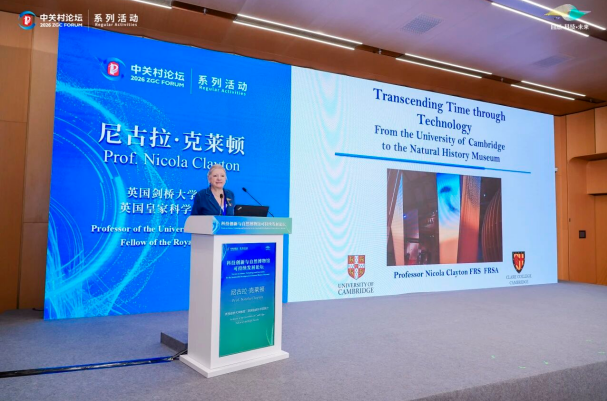
Prof. Nicola Clayton shared how research findings in comparative cognitive science empower immersive exhibition design, and presented smart museum practices driven by AI and visitor data.
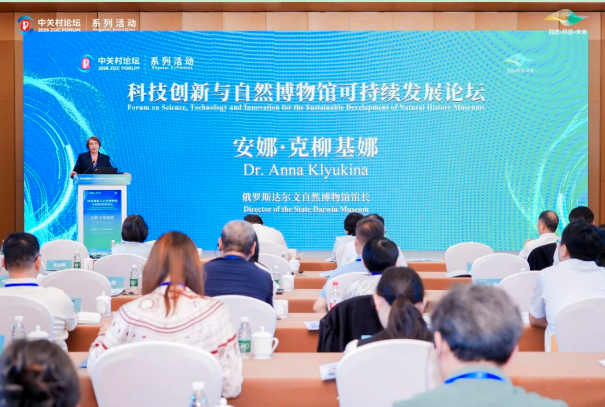
Dr. Anna Klyukina reviewed her museum’s century-long evolution from traditional exhibitions to cutting-edge technologies including AI image generation, 3D scanning and interactive multimedia.
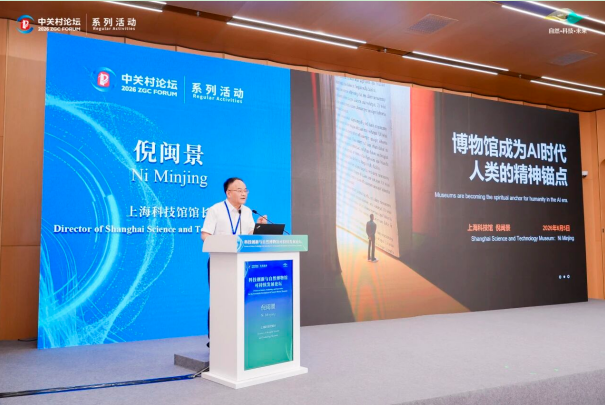
Mr. Ni Minjing pointed out that in the AI era, museums counteract rapidity with slowness, safeguard spiritual value against utilitarianism, and serve as a spiritual anchor for human civilization, with the core principle that "technology is a tool, while humanity is the ultimate goal."
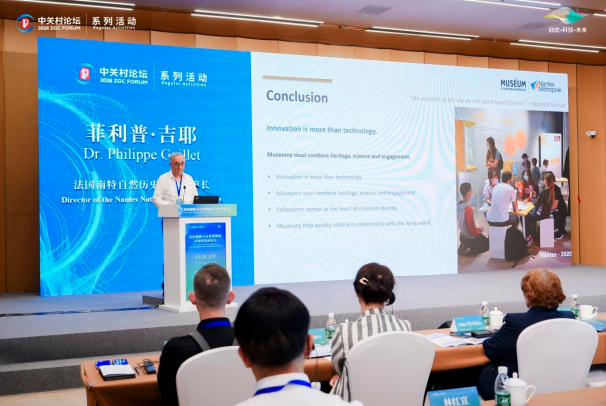
Dr. Philippe Guillet stressed that museums shall strike a balance between narrative exhibition, immersive experience and scientific rigor.
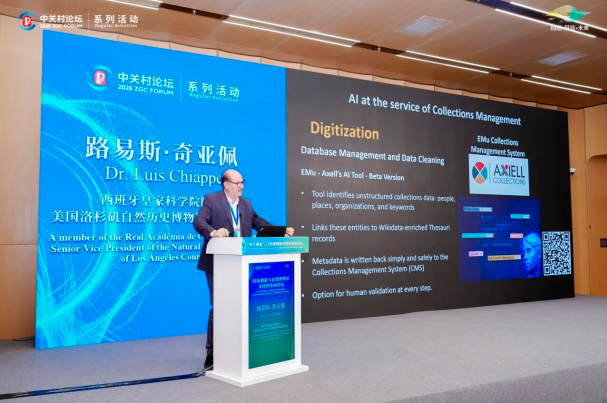
Dr. Luis Chiappe systematically introduced NHMLA’s practical experience in compliant use of generative AI, intelligent collection management and research model construction.
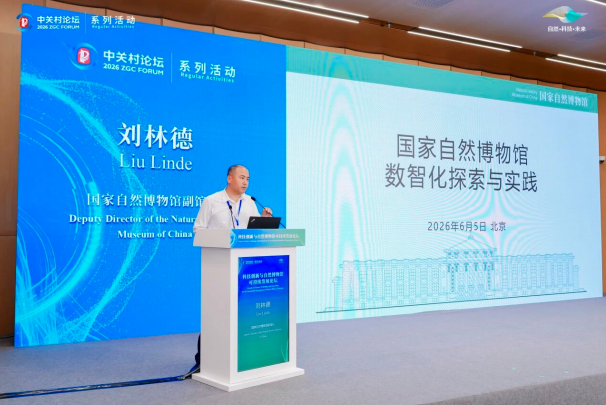
Mr. Liu Linde, Deputy Director of the Natural History Museum of China, displayed the museum’s latest achievements in digital collection management, smart exhibition and public service platform construction.
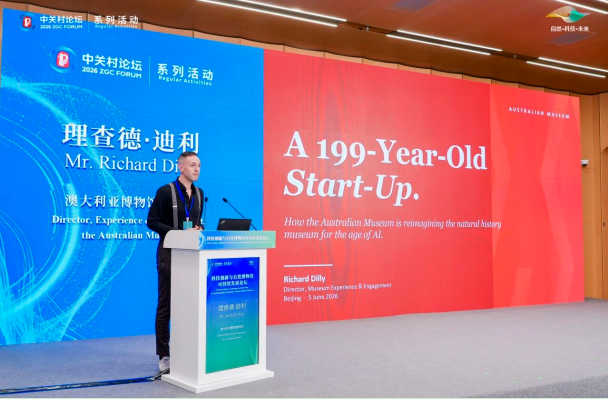
Mr. Richard Dilly shared the museum’s innovative explorations in AI-driven decision-making, citizen science programs and international touring exhibitions.
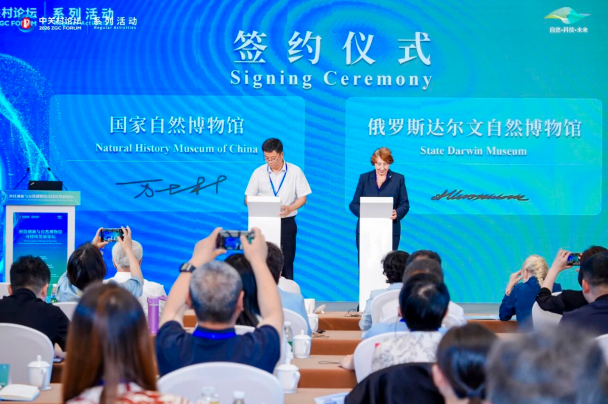
A signing ceremony was held during the forum. The Natural History Museum of China signed cooperation agreements respectively with the State Darwin Museum and Beijing Songyan Power Technology Co., Ltd., to boost integrated development of international exchange and cross-border technological cooperation for natural history museums.
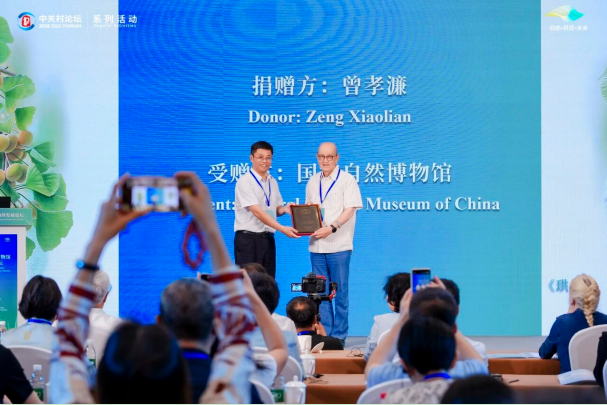
At the donation ceremony, Mr. Zeng Xiaolian, Senior Engineer (Researcher Level) of Kunming Institute of Botany, Chinese Academy of Sciences, scientific botanical illustrator, member of China Artists Association, donated his original botanical scientific paintings to the Natural History Museum of China.
The forum also unveiled the museum’s "Most Popular Exhibits by Visitors", demonstrating positive interaction between public participation and museum development.
Mr. Wan Shilin, Party Secretary and Executive Deputy Director of the Natural History Museum of China, delivered the closing address. He stated that based on the cutting-edge progress and current status of domestic and international natural history museums, the forum discussed new paths, methods and models for integrating AI technologies into the full business system of natural history museums. It fully practiced the permanent theme of the ZGC Forum — "Innovation and Development", built broad consensus and delivered wise solutions to break through traditional development bottlenecks, construct a new smart museum ecosystem, and advance sustainable, high-quality development of the museum field.
In the future, the Natural History Museum of China will continue to deepen the development of "AI + Smart Museums", actively promote the in-depth integration of cutting-edge technologies including artificial intelligence, big data and virtual reality with such aspects as collection management, exhibition innovation, science popularization, scientific research, cultural and creative development and public services. The museum will strive to build a smart natural science popularization base with stronger technological sense, immersive experience, communication power and influence, and jointly draw a new blueprint for sustainable and high-quality development of natural history museums.
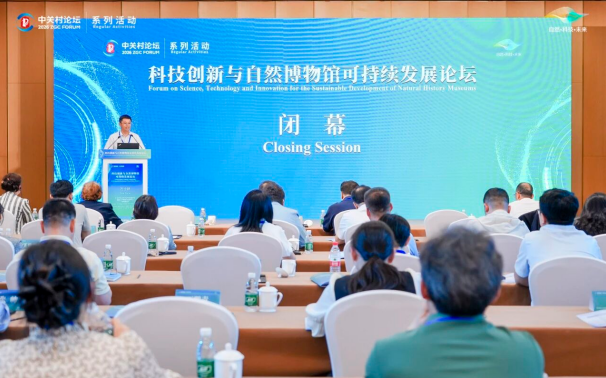
As an annual brand special forum held consecutively under the ZGC Forum framework, this session not only showcased the latest practices of AI empowering natural history museums, built an exchange platform for cross-border integration and intelligent sharing among global natural history museums, but also offered Chinese insights and global solutions for the transformation of natural history museums in the AI era.